

Documentation Index
Fetch the complete documentation index at: https://domoinc-arun-raj-connectors-domo-480626-update-new-field-mi.mintlify.app/llms.txt
Use this file to discover all available pages before exploring further.
Intro
Building an AI agent involves multiple layers of planning, technology, and infrastructure. The starting points depend on what kind of agent you’re building—for example, a chatbot, recommendation engine, or autonomous system. First, define the agent’s purpose and scope, then choose a suitable platform and create instructions and variables for the agent. Integrate the agent with relevant knowledge bases, channels, and platforms, and finally, test, deploy, monitor, and improve its performance.Roadmap
Here’s a general roadmap of the foundational steps for building an agent:1. Define the Objective
Ask: What problem is the agent solving? This defines all downstream choices.- Is it answering questions? (Example: customer support)
- Is it performing tasks? (Examples: scheduling, automation)
- Is it perceiving and acting? (Examples: robotics, self-driving cars)
2. Understand the Environment
- What inputs will the agent receive? (Examples: text, images, sensor data)
- What actions can it take?
- Is it reactive, proactive, or interactive?
- Is the environment static or dynamic?
3. Choose the Agent Type
- Rule-based agent — Uses if-then logic
- Machine learning-based agent — Learns from data
- Reinforcement learning agent — Learns by interacting with an environment
- Hybrid agent — Combines multiple techniques
4. Gather and Prepare Data
- Collect relevant data, such as user interactions, logs, and labeled DataSets.
- Clean, format, and label the data appropriately.
- Split into training, validation, and test sets.
5. Training and Evaluation
- Train models with proper metrics in mind, such as accuracy, precision, reward.
- Use validation/test data to evaluate performance.
- Optimize hyperparameters.
- Incorporate feedback loops if needed.
Use Case - Example Agent
In this use case, the parameters are as follows:- Problem to be solved — The product team is faced with answering specific questions about their platform multiple times a year for several analysts.
- Define purpose and scope — Using previously submitted answers and product release notes, formulate an answer to each of the analyst’s questions.
-
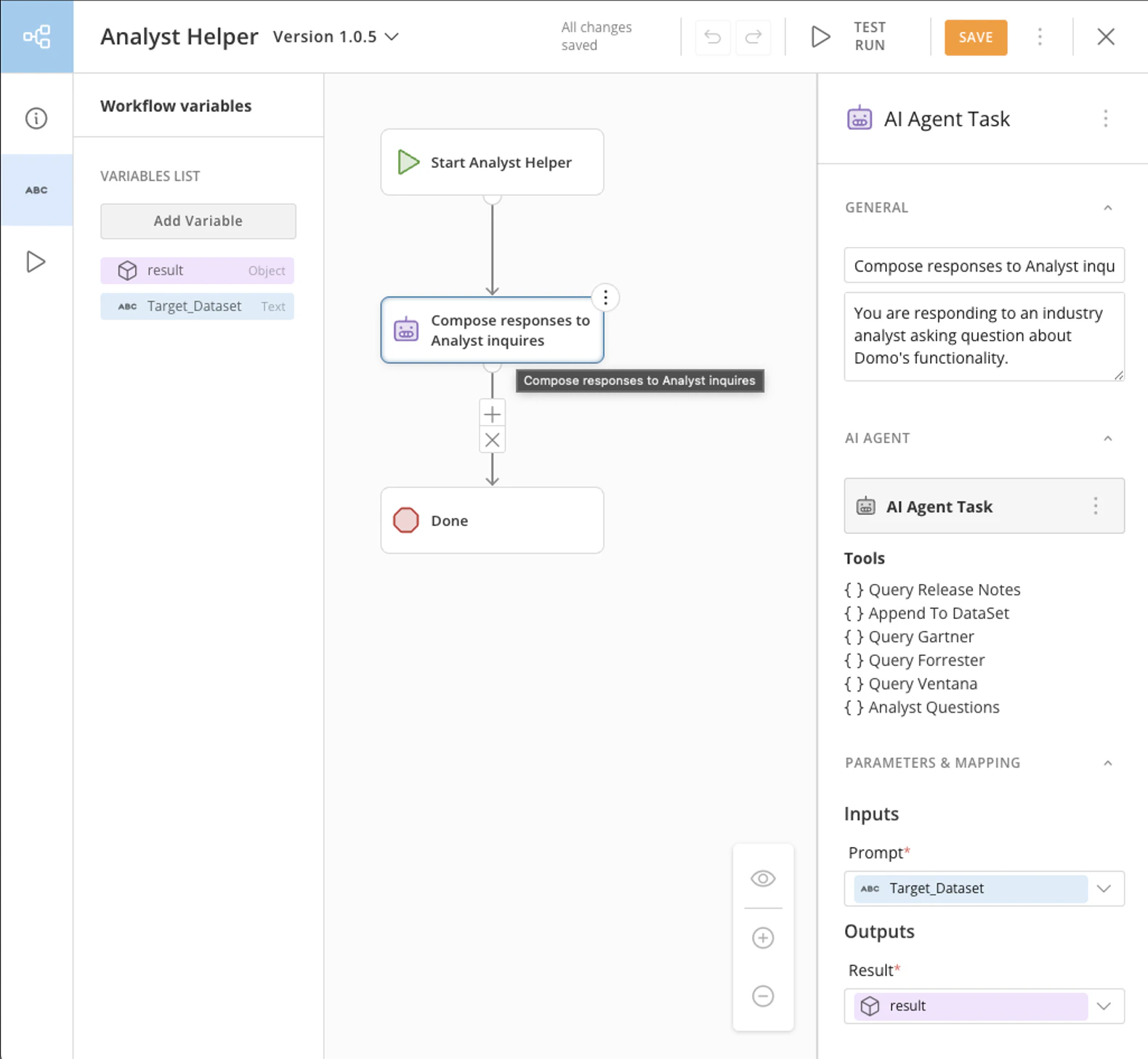
Choose a platform — That’s easy, Domo’s Agent Catalyst.
-
Create instructions and variables
Sample instructions: -
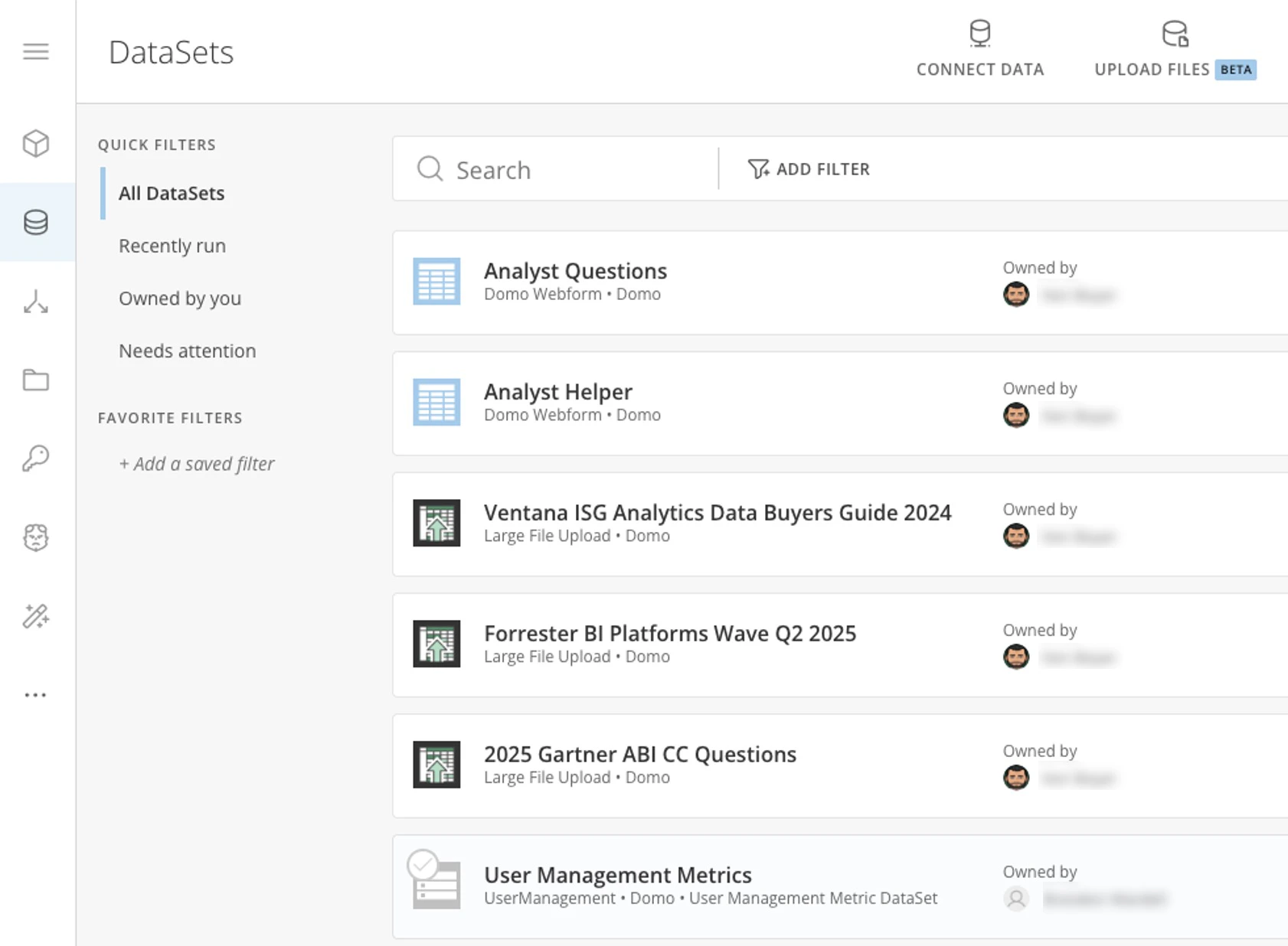
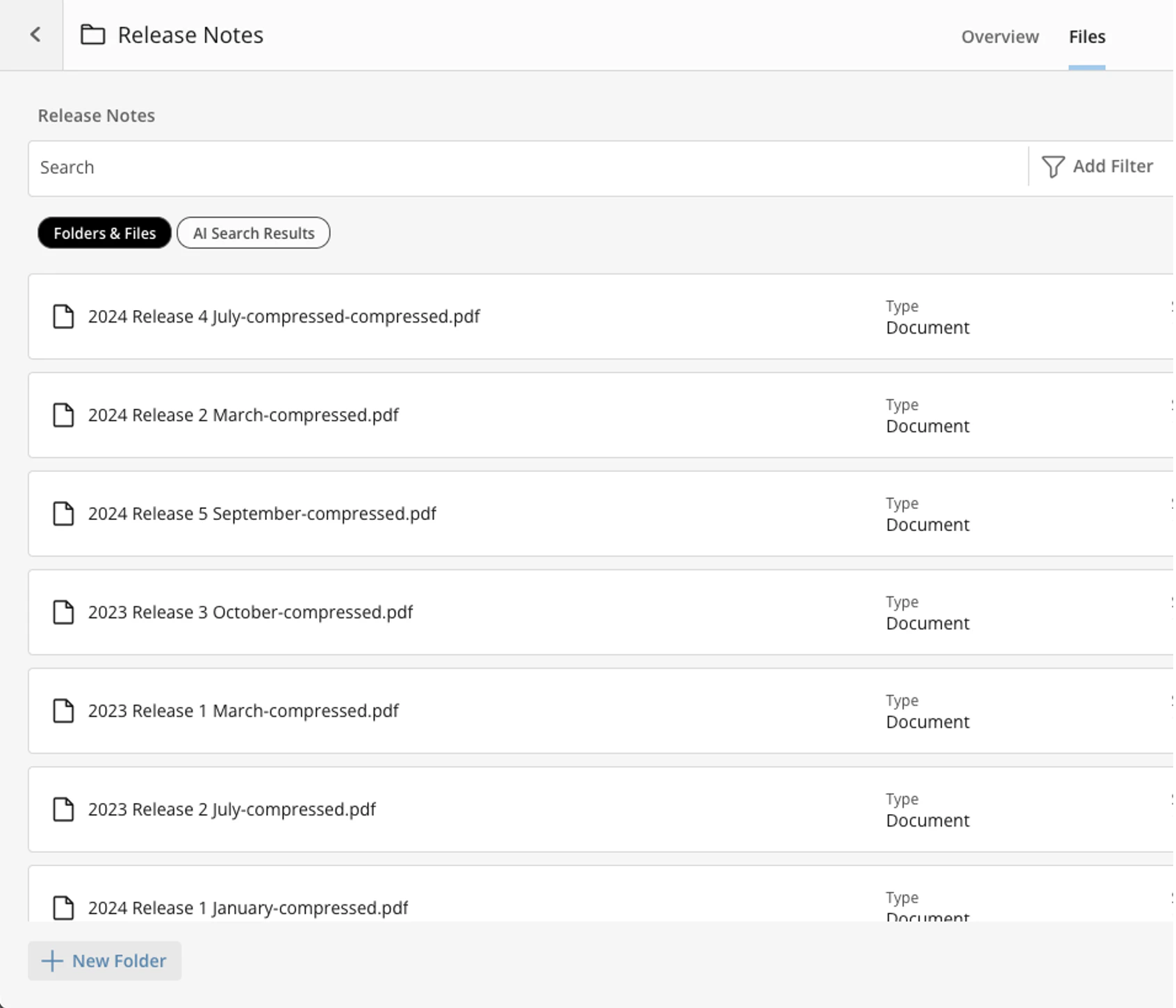
Integrate with knowledge systems — Examples include Domo DataSets and FileSets, as shown below.
More Agent Ideas
Here are some other ideas for agents you could create:-
Knowledge Base Agent
Use all the articles in the Domo Knowledge Base and the data in our community to create a Domo Agent that customers and partners can use to ask questions when trying to build something in Domo.
-
Domo Deep Research
Deep Research uses AI to explore complex topics on your behalf and provide you with findings in a comprehensive, easy-to-read report, and is a first look at how Domo is getting even better at tackling complex tasks to save you time. -
Call Center Analytics
Imagine you deal with over 100,000 phone calls a month. How can you possibly track call quality and compliance regulations and follow up on call center representatives who are below the average on call quality and length? What if you could condense this overwhelming task into actionable insights?


